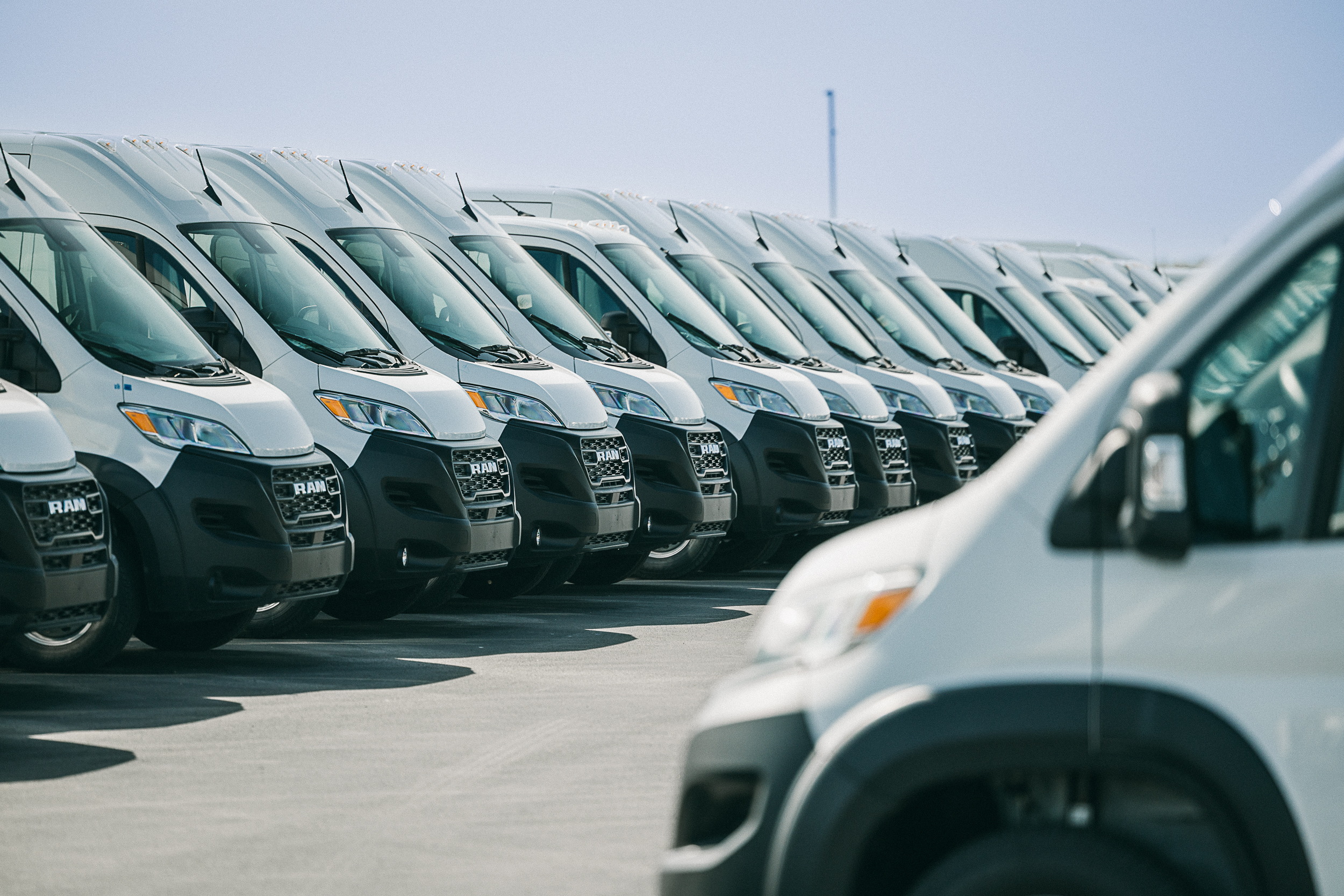
The price of a commercial vehicle is only the beginning.
When businesses evaluate the cost of their fleet, the purchase price is often the first number they consider. But owning commercial vehicles comes with a long list of expenses that continue well after the initial investment.
Maintenance, depreciation, insurance, repairs, and downtime all contribute to the true cost of operating a fleet. And for businesses managing dozens or hundreds of vehicles, those expenses can have a significant impact on the bottom line.
Understanding the full cost of fleet ownership can help businesses make more informed decisions about their vehicles, improve operational efficiency, and determine where their money is best invested.
Looking Beyond the Purchase Price
Purchasing commercial vehicles requires a substantial upfront investment, especially for businesses expanding their operations.
Even with financing, companies must account for down payments, interest, taxes, registration, and any additional equipment or upfitting needed to make vehicles work-ready.
But the financial impact goes beyond what appears on the invoice.
Every dollar invested in vehicles is capital that could otherwise be used to grow the business. Hiring employees, expanding into new markets, investing in technology, and improving operations all compete for the same financial resources.
This doesn’t necessarily make purchasing vehicles a bad investment. For businesses with consistent, long-term fleet needs, ownership can make financial sense. The important question is whether the capital committed to those vehicles is delivering the best return for the business.
The Ongoing Expenses of Fleet Ownership
Once a vehicle is purchased, the costs don’t stop. In fact, some of the most significant fleet expenses accumulate over time.
Depreciation
Commercial vehicles generally lose value as they age and accumulate mileage. While depreciation doesn’t arrive as a monthly bill, it represents a real financial cost when it’s time to sell or replace a vehicle.
A van purchased for $50,000 won’t necessarily retain that value after several years of daily commercial use. Its resale value will depend on mileage, condition, maintenance history, and market demand.
For businesses operating large fleets, depreciation can represent a substantial portion of total ownership costs.
Maintenance and Repairs
Routine maintenance is essential to keeping commercial vehicles reliable.
Oil changes, tire rotations, brake inspections, and other preventative services help reduce the risk of unexpected mechanical issues. But as vehicles age, maintenance requirements and repair costs can become more difficult to predict.
An unexpected repair doesn’t just affect the maintenance budget. It can also create scheduling challenges, reduce available fleet capacity, and interrupt daily operations.
Insurance and Administration
Owning a commercial fleet also means managing insurance, registration, licensing, compliance requirements, and vehicle documentation.
As a fleet grows, these responsibilities become increasingly complex, particularly for businesses operating across multiple states or markets.
The administrative time required to manage these tasks is another cost of ownership that can be easy to overlook.
When a Vehicle Isn’t Moving, It’s Still Costing Money
One of the most overlooked expenses in fleet management is the cost of an underutilized vehicle.
Business demand rarely stays the same throughout the year. Seasonal fluctuations, changing contracts, and shifting customer needs can all affect how many vehicles a company needs at any given time.
A business may require 50 vehicles during its busiest season but only 35 during slower months.
If all 50 vehicles are owned, the company continues carrying many of the associated costs even when 15 are sitting idle.
Financing payments, insurance, depreciation, and certain maintenance expenses don’t disappear just because a vehicle isn’t generating revenue.
On the other hand, operating with too few vehicles can be equally expensive.
When a fleet is stretched too thin, businesses risk turning down new work, delaying deliveries, or struggling to cover vehicles that are temporarily unavailable.
Finding the right balance between fleet capacity and utilization is one of the most important factors in controlling ownership costs.
The Financial Impact of Vehicle Downtime
Vehicle downtime is another expense that can be difficult to measure.
When a commercial van breaks down, the immediate cost may be the repair itself. But the operational impact can extend much further.
For a delivery company, an unavailable vehicle could mean missed routes, delayed shipments, or additional expenses to redistribute work. For a service business, it could mean canceled appointments, delayed projects, or employees unable to complete their jobs.
The longer a vehicle remains out of service, the greater the potential impact on productivity and revenue.
That’s why preventative maintenance, vehicle replacement planning, and access to backup capacity are important parts of an effective fleet strategy.
A vehicle doesn’t have to be expensive to repair to become expensive to own. Sometimes, the biggest cost is the work it prevents your business from completing.
Understanding Your Fleet’s Total Cost of Ownership
To evaluate fleet expenses accurately, businesses need to consider the total cost of ownership, commonly referred to as TCO.
Rather than focusing on the purchase price or monthly payment alone, TCO looks at the full financial impact of acquiring, operating, maintaining, and eventually replacing a vehicle.
A comprehensive fleet cost analysis should account for:
- Acquisition costs: Vehicle purchases, financing, taxes, and upfitting.
- Depreciation: The loss of vehicle value over time.
- Operating expenses: Fuel, insurance, registration, and other recurring costs.
- Maintenance and repairs: Routine services, replacement parts, and unexpected mechanical issues.
- Downtime: Lost productivity, operational disruptions, and replacement transportation.
- Administrative costs: Time and resources spent managing vehicles and compliance.
- Resale value: The amount recovered when a vehicle is sold or replaced.
Evaluating these expenses together gives businesses a more realistic picture of what their fleet actually costs.
It can also reveal opportunities to reduce unnecessary spending, improve vehicle utilization, and make better decisions about future fleet investments.
Does Owning Every Vehicle Make Financial Sense?
For some businesses, owning commercial vehicles is the most practical long-term solution.
If vehicle demand is consistent, utilization is high, and the company has the resources to manage maintenance and replacement cycles, ownership can provide lasting value.
But not every vehicle in a fleet serves the same purpose.
Some are needed every day. Others may only be necessary during peak seasons, temporary contracts, or periods of expansion.
This is where a more flexible approach to fleet management can make sense.
Rather than purchasing enough vehicles to accommodate the busiest periods of the year, businesses can maintain a core owned fleet and supplement it with rentals when additional capacity is needed.
Commercial vehicle rentals can also help companies enter new markets, replace vehicles experiencing downtime, or support new contracts without immediately committing capital to additional purchases.
Renting isn’t automatically less expensive than owning over the long term. Its value often comes from preserving working capital, reducing certain ownership responsibilities, and allowing businesses to adjust fleet capacity as demand changes.
The goal isn’t necessarily to own fewer vehicles. It’s to make sure every vehicle in your fleet serves a clear operational and financial purpose.
Building a More Cost-Effective Fleet
Reducing fleet expenses doesn’t always require a major change in how a business operates.
Sometimes, it starts with better visibility into the vehicles you already have.
Tracking utilization, reviewing maintenance costs, evaluating aging vehicles, and forecasting demand can help identify where money is being spent unnecessarily.
Businesses should regularly consider whether their current fleet size matches operational needs, whether certain vehicles are becoming too expensive to maintain, and whether purchasing additional vehicles is the most efficient way to support growth.
A strong fleet strategy balances cost, reliability, and flexibility rather than focusing on any single expense.
A Flexible Approach With Kingbee Vans
At Kingbee Vans, we help businesses build fleet capacity without the capital commitments and complexities that come with purchasing every vehicle they need.
With work-ready commercial vans, flexible rental options, approved routine maintenance, and a growing nationwide network of hubs, Kingbee makes it easier to add vehicles as business needs change.
Whether you’re expanding into a new market, preparing for seasonal demand, or supplementing an existing fleet, our rental solutions can help you access additional capacity without making a permanent investment in vehicle ownership.
The right fleet strategy isn’t just about what your vehicles cost. It’s about making sure they’re helping your business move forward.
Explore flexible commercial vehicle solutions at kingbee-vans.com.